
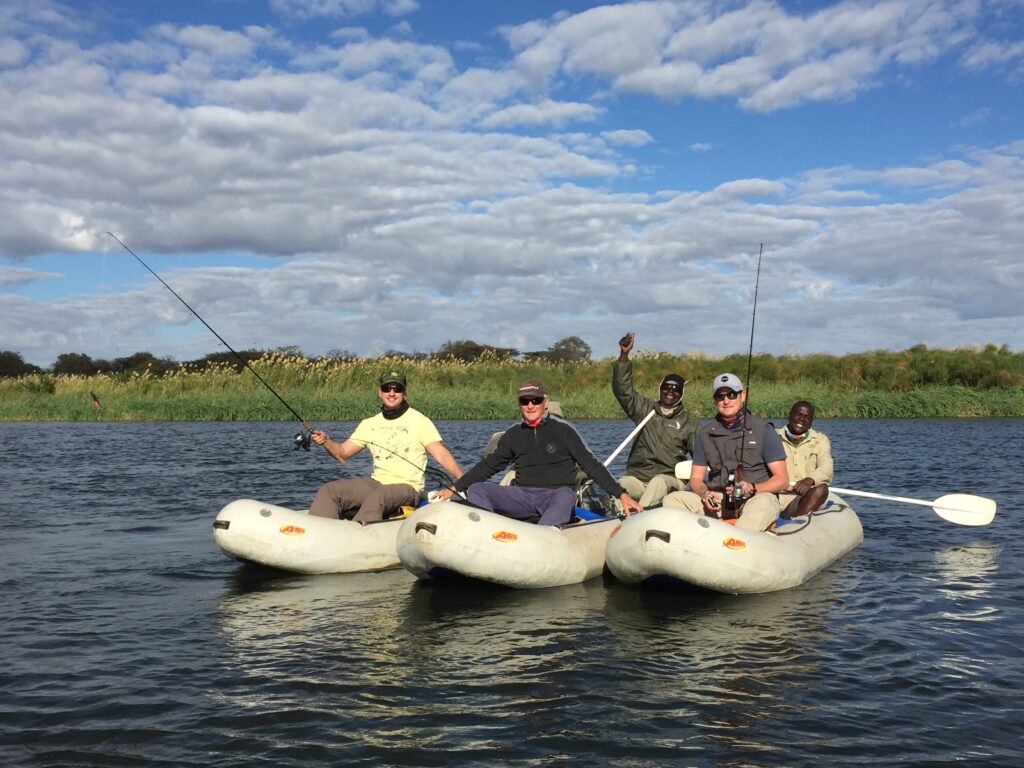
It’s a fair question. And every angler asks it eventually. Do you really need a boat for tigerfish, or can you do just fine from the bank? The honest answer? Both can work. But they’re not equal.
If your goal is simply to enjoy a few casts in wild country, shore fishing has its place. If your goal is to maximize water covered, reach prime holding structure, and put yourself in front of better fish more consistently, boat fishing usually wins. On the Zambezi, that edge is hard to ignore.
The Case for Shore Fishing
There’s something beautifully direct about fishing from the bank.
No engine noise. No drifting off line. No distraction. Just you, the river, and the very real possibility that the next cast gets flattened by a fish with a terrible attitude.
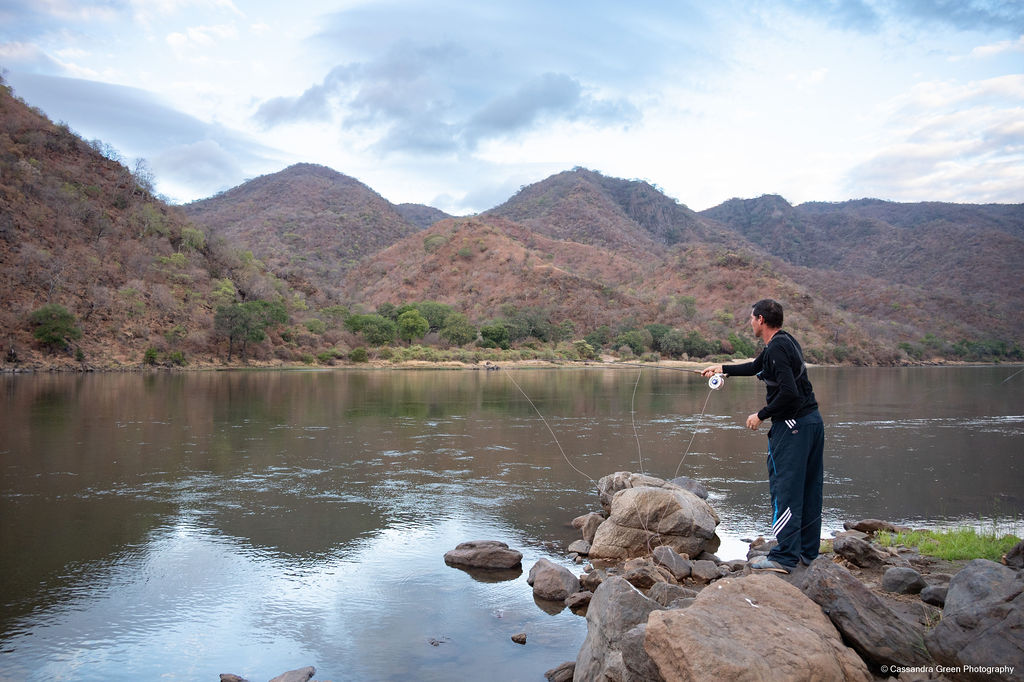
Shore fishing can be productive where current lines swing close, where bait gathers near accessible drop-offs, or where side channels and points create ambush water. It can also suit anglers who enjoy slower, more deliberate sessions and don’t need to chase fish over distance.
And, yes, there’s romance in it. Real romance. The kind that doesn’t need help.
But the Zambezi Is a Big-Water Fishery
This is where boats change the equation.
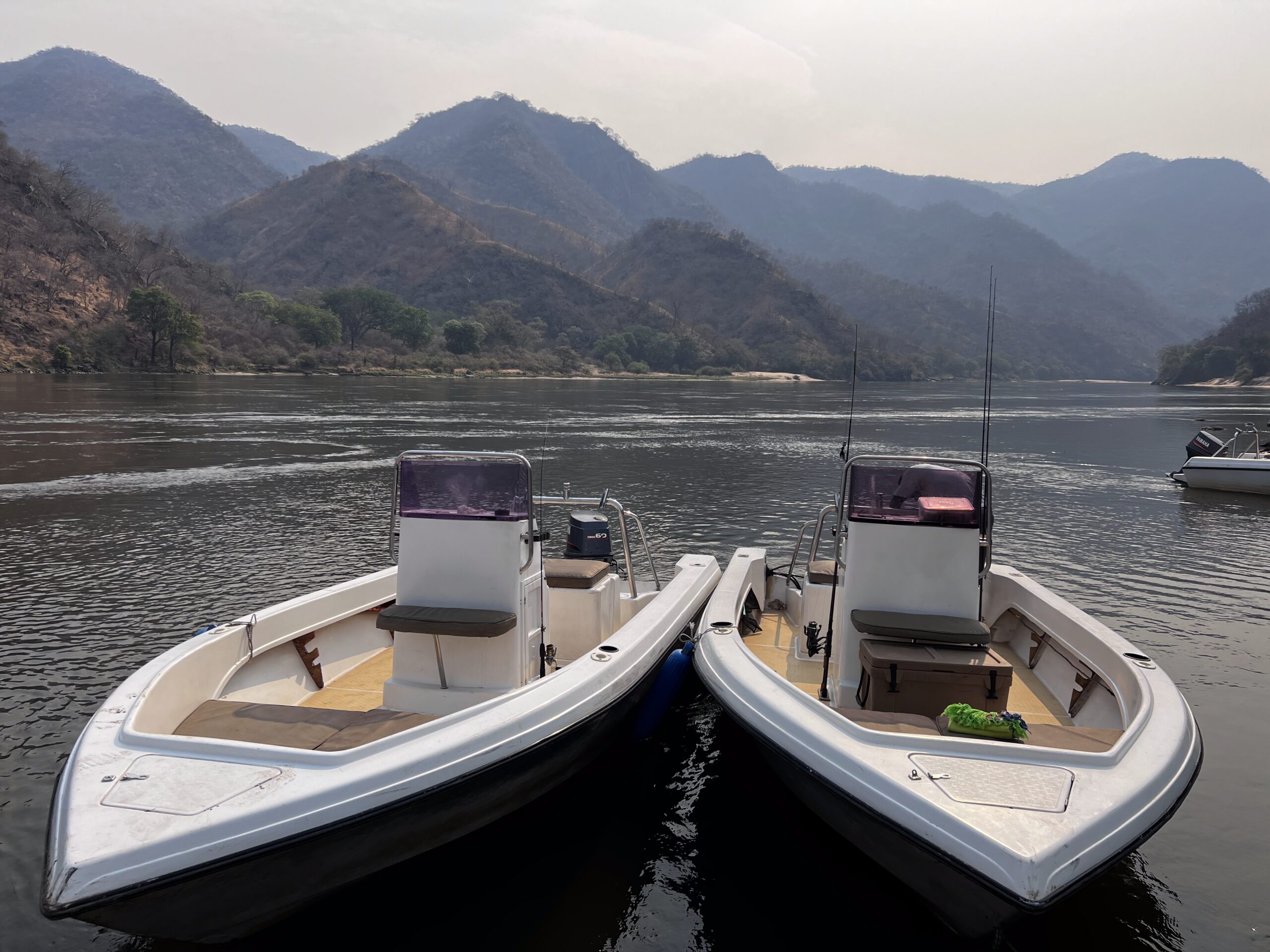
Tigerfish aren’t spread out evenly, and the best water is often not the easiest water to reach on foot. Afri G’s destination pages repeatedly emphasise proximity to productive river systems, quick boat access to hotspots, and the value of guided positioning on floodplains, channels, and structure-rich water. Shackletons, for example, notes that rich tiger waters are less than ten minutes by boat from the lodge, while Shamwari is marketed around effortless access to prime areas in the Upper Zambezi floodplain.
That matters. A lot.
Because tiger fishing is often about angles, drift, current speed, and staying mobile enough to follow what the river is telling you.
Boat Fishing Gives You Access
Access is the biggest argument. Maybe the biggest full stop.
From a boat, you can work cut banks, deeper channels, reed edges, submerged timber, current seams, floodplain mouths, and backwater entries in a single session. You’re not committed to one piece of river. You can adjust. Explore. Switch tactics. Hunt. Afri G’s partner network and comparable specialist operators in the Zambezi region both centre boats and guides as the core delivery model, with two anglers per boat and lodge selections built around “perfect fishing locations” and easy logistics.
That flexibility becomes even more valuable when conditions shift during the day.
Water colour changes. Wind changes. Bait moves. The fish stop showing on one line and start feeding on another. From the bank, you can feel stuck. From a boat, you can respond.
Boats Also Improve Presentation
Tigerfish are savage, but they’re not careless.
Sometimes the difference between a follow and a strike is simply the angle of the cast. A boat lets guides line you up properly on structure, drift baits across productive depth changes, or hold position where current pushes food through. Afri G’s own blog points to techniques like drifting baits over drop-offs and working lures along cut banks, eddies, and submerged cover. Those are boat-friendly methods for a reason.
You’re not just reaching better water. You’re fishing it better.
When Shore Fishing Still Makes Sense
That said, shore fishing isn’t second-rate. Not always.
It can be excellent as an extra session around camp, a way to fish dawn or dusk without committing to a full boat run, or a satisfying option for anglers who love stripping flies or working spoons tight to accessible current. It also gives the trip a different texture. Less tactical. More elemental.
For some people, that matters as much as numbers.
And let’s be honest, there’s a certain pleasure in standing on African soil with a tigerfish rod in hand and no agenda beyond the next cast.
So, Which Is Better?
If the question is about pure productivity, coverage, and the best chance at trophy fish, boat fishing is usually the stronger option on the Zambezi. The river is too dynamic, too structural, and too spread out for most travelling anglers to limit themselves to the bank. That’s exactly why operators in this fishery build their packages around boats, guides, and fast access to productive water.
If the question is about experience, the answer gets more personal.
The best trip often includes both: serious time from a boat, then opportunistic sessions from shore when the setting is too good to ignore.
That’s the sweet spot. Not either-or. Smart use of both.